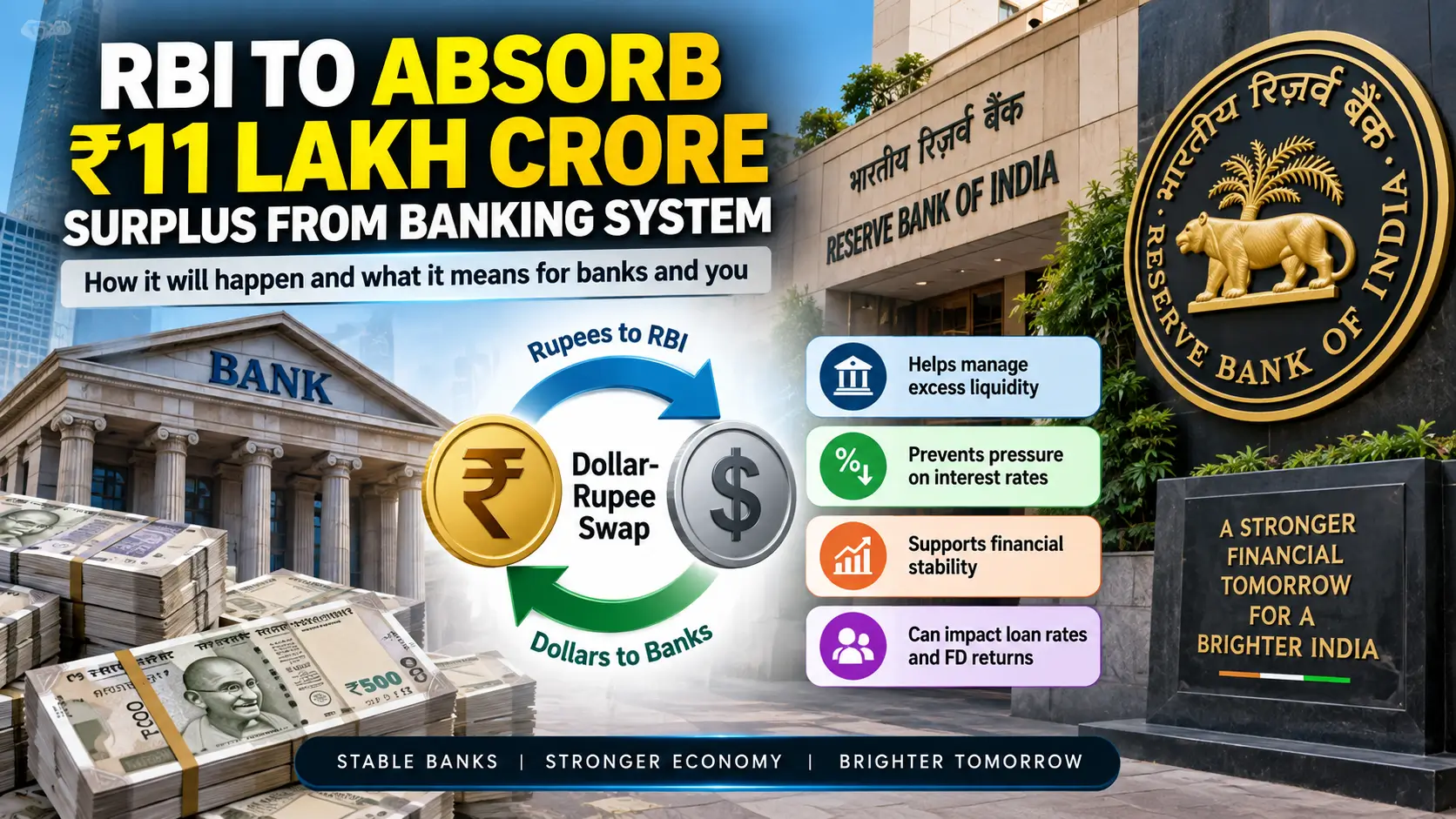
India’s banking system is currently holding around ₹11 lakh crore in surplus liquidity. The Reserve Bank of India (RBI) is preparing to absorb this excess money from the system through a dollar-rupee swap mechanism. The move is aimed at managing liquidity conditions and preventing excessive cash from creating pressure on banks.
Why Is RBI Absorbing ₹11 Lakh Crore?
The Indian banking system reportedly has surplus liquidity of around $115 billion, equivalent to approximately ₹11 lakh crore. This means banks have more funds available than they currently need.
Excess liquidity can put pressure on banks to lend money at lower interest rates. It can also contribute to inflationary pressures if too much money continues to circulate in the economy.
To manage the situation, the RBI has offered banks a dollar-rupee swap facility. Under this arrangement, banks can provide surplus rupees to the RBI and receive US dollars in return. At the end of the agreed period, the RBI will return the rupees while taking back the dollars.
How Will the Dollar-Rupee Swap Work?
According to the information provided, the RBI has offered the swap facility for different tenures. For the three-month swap, the rate has been increased by 17 basis points to 2.9%. A six-month swap has been offered at a rate 11 basis points higher than the corresponding level.

Through this mechanism, the RBI can temporarily remove surplus rupee liquidity from the banking system while providing banks with foreign currency in exchange.
The objective is to maintain balanced liquidity conditions without allowing excess funds to create unnecessary pressure on the banking system.
What Will Banks Gain From the RBI Swap?
The arrangement can benefit banks in more than one way. By participating in the swap, banks can reduce the amount of surplus cash sitting on their balance sheets while also earning a return under the terms of the transaction.
Once the swap period ends, the RBI will return the rupee funds and take back the dollars. This allows banks to manage excess liquidity while potentially earning income from the transaction.
What Could Be the Impact on Common People?
Liquidity conditions in the banking system can have an indirect impact on ordinary customers. When banks have sufficient funds, they may be more willing to offer loans at competitive rates, which can support borrowing and economic activity.

However, excessive liquidity can also have an impact on depositors. If banks have more money than they need, they may have less incentive to offer higher interest rates on fixed deposits.
Therefore, RBI’s liquidity-management measures can influence both borrowing conditions and returns on bank deposits.
Why Is Liquidity Management Important?
Maintaining an appropriate level of liquidity is important for the stability of the banking system. Too little liquidity can make borrowing more difficult, while excessive liquidity can encourage cheaper lending and potentially increase inflationary pressure.
The RBI’s dollar-rupee swap mechanism is intended to absorb excess funds temporarily and maintain more balanced conditions within the banking system.
Key Takeaway
The RBI’s dollar-rupee swap facility is aimed at absorbing surplus liquidity from India’s banking system. Banks can exchange excess rupees for dollars for a specified period and later reverse the transaction.

The move could help ease the pressure created by excess liquidity while giving participating banks an opportunity to earn returns. For ordinary consumers, the broader impact could be seen through changes in loan availability, lending rates and fixed-deposit returns.